Microsoft Keeps Trying to Name the Future
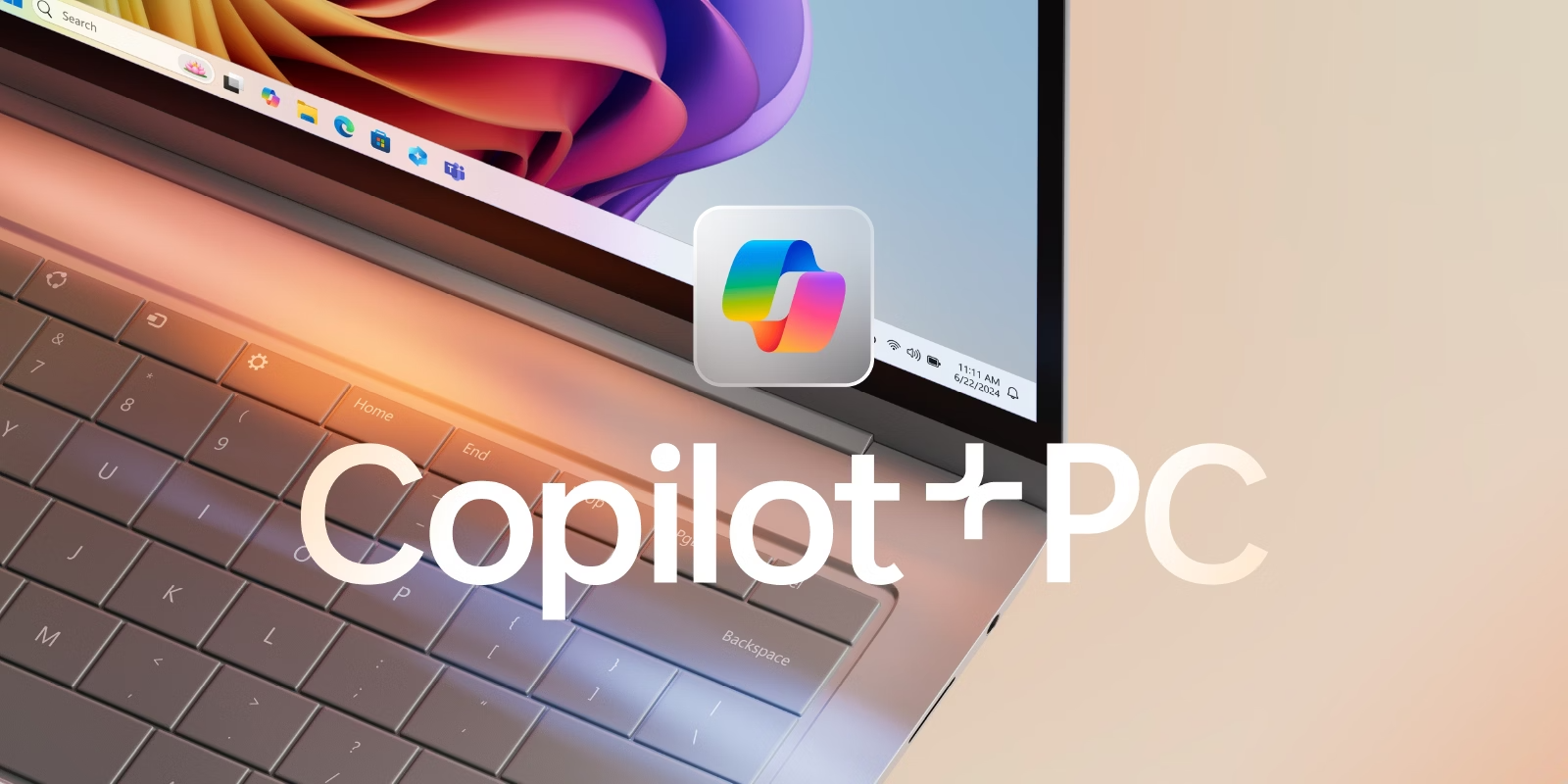
Last week, Microsoft quietly retired the phrase “Copilot+ PC” and it’s been making headlines around the tech scene. Shortly after Copilot+ PCs hit the market 2 years ago, I got my hands on one and wrote a blog post about it.
However, that blog post mainly focused on the the fact that the first Copilot+ PCs were ARM-based and lightning fast, rather than on the broader Copilot+ PC requirements. And the only interesting requirement of a Copilot+ PC was that it have a Neural Processing Unit (NPU) of at least 40 trillion operations per second (TOPS) to run local AI models that would perform useful on-device functions in Windows 11 like Microsoft Recall (which had a rather troubled launch). More intense tasks, of course, would still leverage cloud AI models.
Microsoft essentially wanted to brand PCs with an NPU as an entirely new product category that aligned with their other AI-ified names like Microsoft Copilot, GitHub Copilot, Copilot for Microsoft 365, and so on. And who could blame them? In 2024, AI was hot. You could put AI in any product description and people would throw bricks of cash at you (exaggerated, yes, but not too much ;-).
However, Microsoft has a long history of jumping the gun on technologies.
Back in 2001, Bill Gates stood on a stage at COMDEX and announced what Microsoft called the next generation of mobile computing: the “Tablet PC.” And he predicted it would become the most popular form of PC within five years.
It did not. Well… not until Apple did it with the iPad almost a decade later.
Windows Phone 7 arrived in 2010 with a fresh interface and a very deliberate attempt to create a different kind of mobile experience compared to Apple and Google, while touting Xbox Live and Zune integration. Microsoft subsequently brought that design language to the broader Windows ecosystem with Windows 8, where it became known as “Metro.”
Have you talked about tablet PCs, Windows phones, or Metro recently? Probably not, and neither have I. And soon, you won’t be talking about Copilot+ PCs either (assuming that you did, of course). That said, NPUs won’t be going away any time soon – nor will the idea of having an AI-enabled computer that can run models locally on an NPU (or CPU or GPU) while also leveraging bigger AI models in the cloud.
Now, in Microsoft’s defense, they’ve been reasonably good at identifying when something was changing in the tech space. But to understand the bigger picture, the Gartner Hype Cycle is useful: All new technologies go through a period of inflated expectations, followed by disappointment, experimentation and eventual mainstream adoption.
But companies often have another marketing hype cycle running alongside it. First comes the technology and excitement. Then comes the product category and brand (e.g., Copilot+ PC). Then comes the inevitable realization that customers don’t necessarily care about the brand – instead, they care about whether the technology can make a meaningful difference in their lives. And if it does, it eventually becomes part of everything.
I remember a time when laptops had a “Wi-Fi” sticker on them, and when PCs had a sticker that listed the number of cores the CPU had. Now, everything has Wi-Fi and multiple cores. And soon enough, the ability to run useful AI models locally will simply be another ordinary capability of a computer, whether the work happens on a CPU, NPU, GPU, or some combination of the three.
Now, why are people making a big deal of things like this when Microsoft is involved?
Because it’s Microsoft.
They own one of the world’s most important computing platforms, and when they see a technological transition coming, they have an enormous incentive to define the platform around it. And the platform name they choose gets echoed by others, including hardware vendors, and the general public. Then it disappears and people notice.
So, if you want to know if some novel new technology that will eventually become mainstream has recently arrived on the scene, just look to see if Microsoft gives it a name.